
Articles
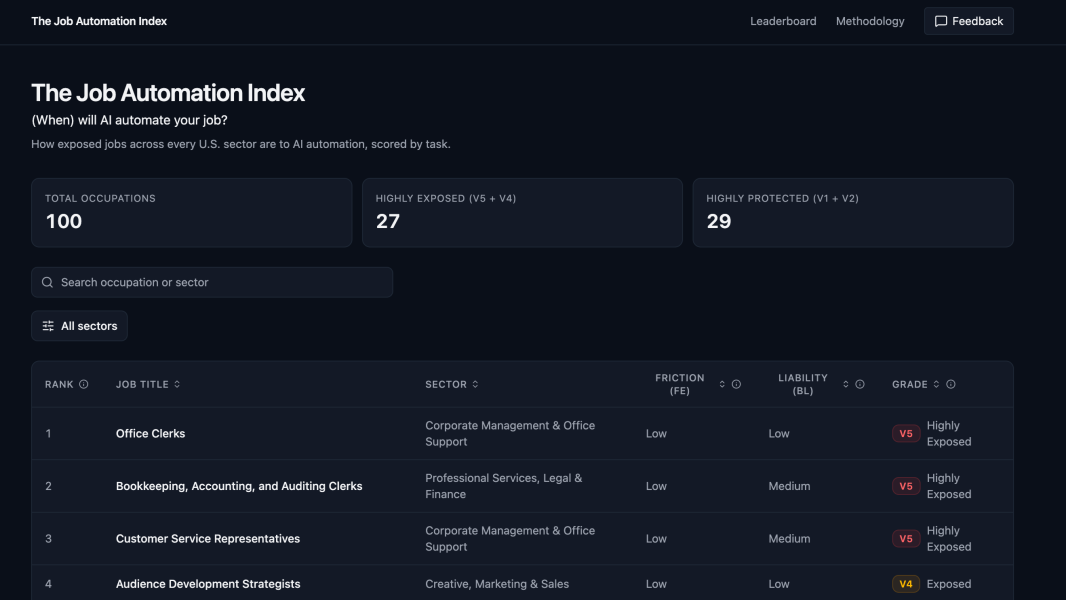
(When) will AI automate your job?on LinkedIn
I built a small side project called The Job Automation Index. It is based on Andrej Karpathy's idea of verifiability: AI advances fastest when it can perform a task and easily check whether the result is correct. Instead of assessing jobs as a whole, I broke 100 occupations down into five present-day tasks each and looked at how exposed every task is to AI automation. I've written about where the idea came from, the method behind it, and what I learned along the way.

Next Patient: Core IT. It Wrote Its Own Chart.on LinkedIn
While we obsess over AI writing software for product teams, we're missing the multi-billion-dollar playground where agents fit best: Core IT Operations. But there's a Step Zero that vendor marketing glosses over. IT is uniquely positioned to automate because it spent 30 years documenting itself. Runbooks, knowledge bases, CMDBs. But an agent follows a stale 2022 procedure on 2026 infrastructure with absolute confidence. It doesn't automate the work. It breaks production at machine speed. Before we hand over the keys to the service desk or the 3am on-call rotation, we don't have an AI problem - we have a data-cleansing problem.
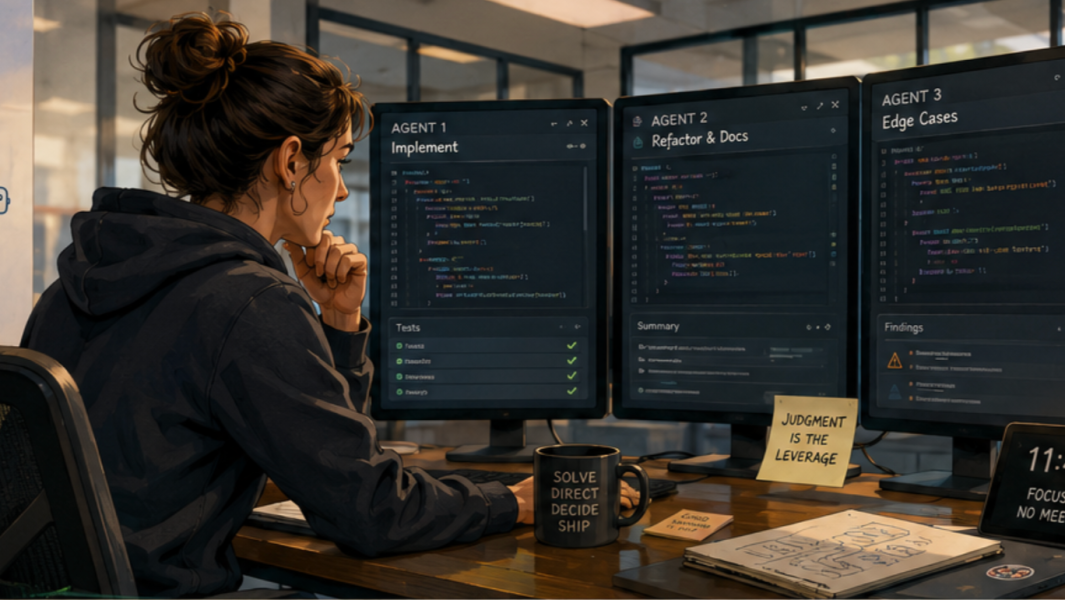
Your Best Engineer Is Now a Manager of Machineson LinkedIn
Your best engineer is no longer just typing code. They're managing machines. The shift from hands-on building to directing agents is changing what it means to be a senior engineer. The old skill was telling the machine exactly how to do something. The new one is handing it the whole problem and judging what comes back, knowing it might be confidently wrong. If you lead engineers, this isn't something to leave to chance. We need a new ladder for this craft - what good looks like at each stage, and how we grow people into it.
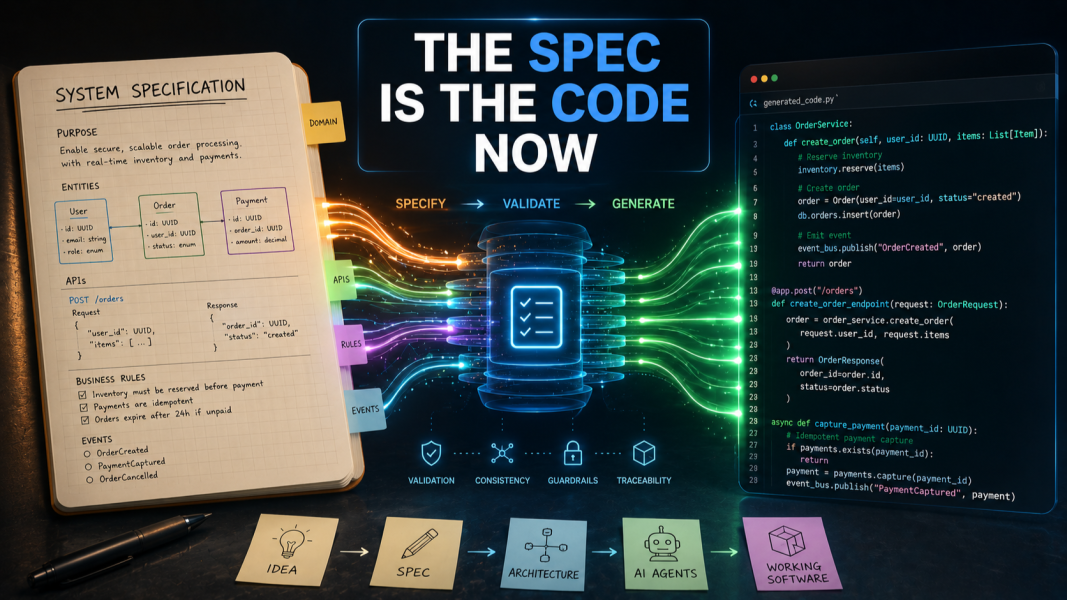
The Spec Is the Code Nowon LinkedIn
We spent twenty years working to escape the spec. AI agents are pulling us right back to it. The vibe-coding shortcut works for a weekend prototype. It hits a wall the moment the agent starts hallucinating against the unwritten context living in the team's heads. If we get this right, the spec becomes the highest-value artifact we own - the place where judgment, taste, and design live. If we get it wrong, we'll have invented Waterfall with a chatbot. The skill that wins in the next decade isn't writing code faster. It's engineering the spec.
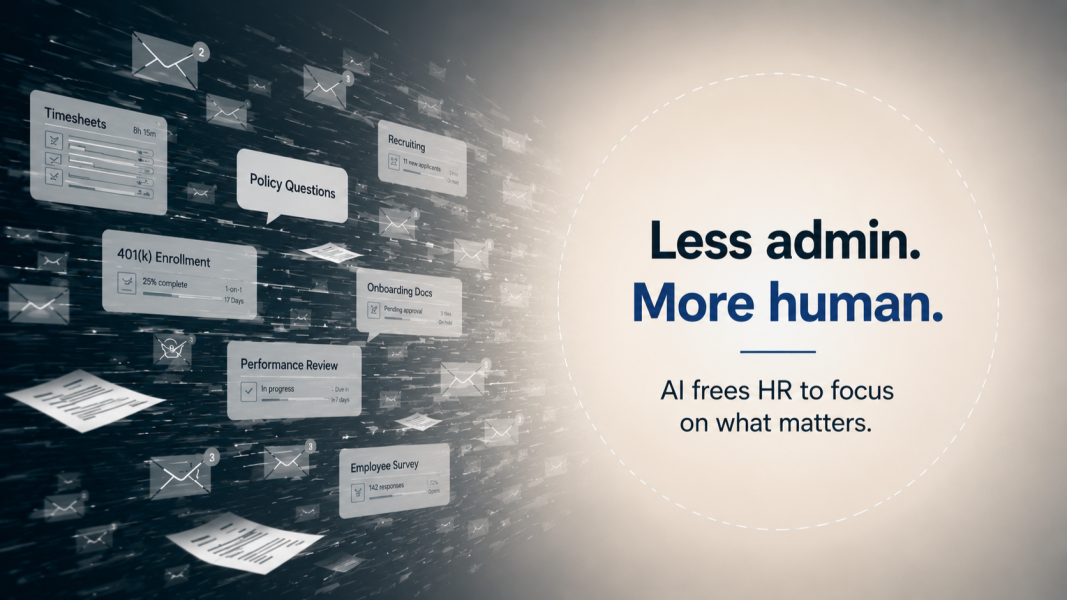
HR Was Always About People - AI Might Finally Let It Be.on LinkedIn
We've been renaming the HR function for a century: Welfare Secretary > Personnel Administration > Human Resources > People & Culture. Every time a label starts feeling too clinical or too fluffy, the rebrand workshop opens back up. But the title has always been a lagging indicator of corporate anxiety. Right now, a new force is pushing on the name. In my latest article, I look at the changing landscape of People & Culture.
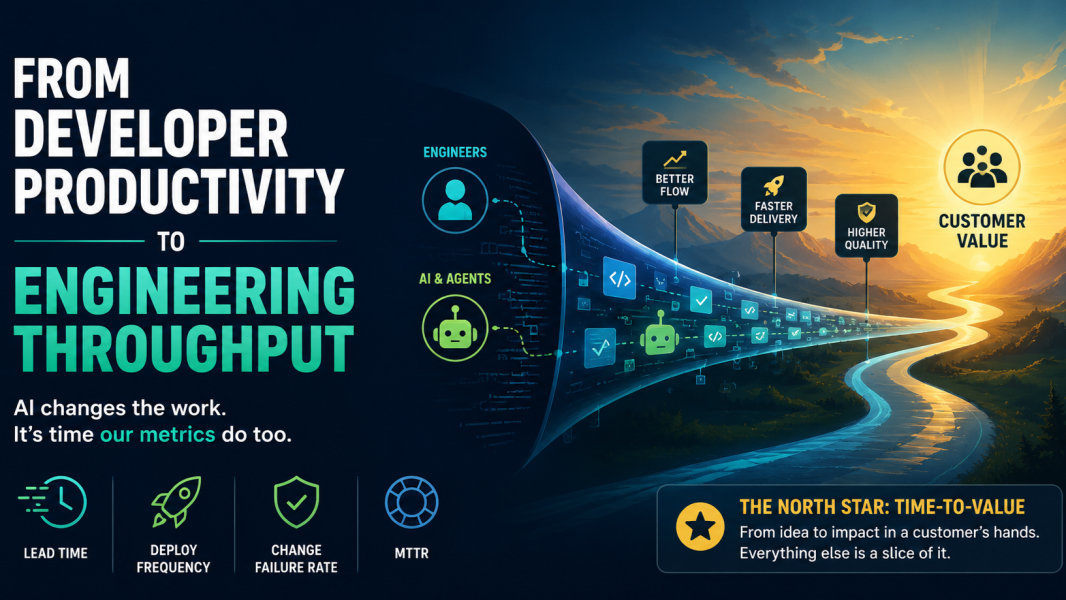
From Developer Productivity to Engineering Throughputon LinkedIn
A senior engineer running three agents in parallel isn't writing code. They're specifying problems, reviewing solutions, and making judgment calls. We're still measuring 'Developer Productivity' as if people are the bottleneck. But the work today is closer to Engineering Throughput - how fast a system of humans, agents, and tooling turns ideas into customer value. Spoiler: DORA still holds but it needs new friends. Enter 'Agent-Human Handover Frequency', 'Throughput per dollar of compute' and some other possible newcomers. Also my favorite - Time-to-value - still pays the rent.
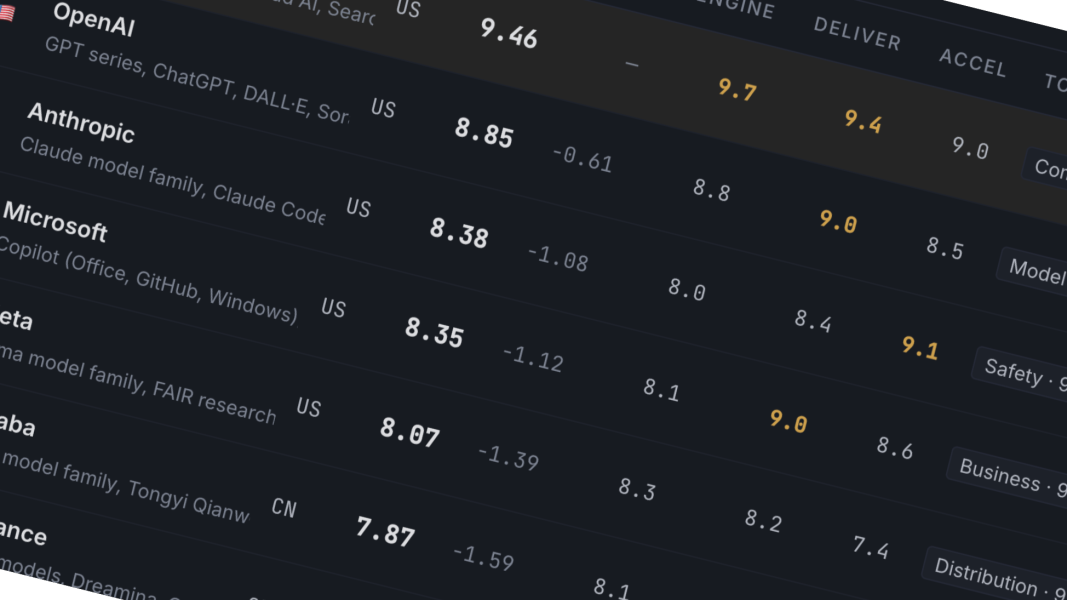
Now live: AI Power Rankingson LinkedIn
Which AI companies are actually pulling ahead right now? I put a live ranking online today - aipowerrankings.com. Fifteen companies, ten evaluation areas, and a panel of frontier AI models doing the scoring (Claude, GPT-5.5, Gemini). The methodology is open, every score has a justification, and you can run it yourself on whatever model you trust. Two things stood out in the first run. The US/China gap is narrower than the headlines suggest - Alibaba and ByteDance both rank ahead of Amazon, and DeepSeek sits ahead of Mistral and Apple. And the AI model with the strongest reason to flatter its own parent company turned out to be the harshest critic on it.

Stop Putting a Turbo on a Horse Carton LinkedIn
We're adding AI to our engineering processes - building, code review, testing, sprint planning, deployment. And most of us are doing it the same way: find the slow step, point AI at it, move on. But what if the process itself is the problem? Our development workflows were designed for a world where humans did all the building. Speeding up the steps inside an outdated process doesn't make it modern - it just makes it a faster version of the wrong thing. The real opportunity isn't automation only - it's redesign.
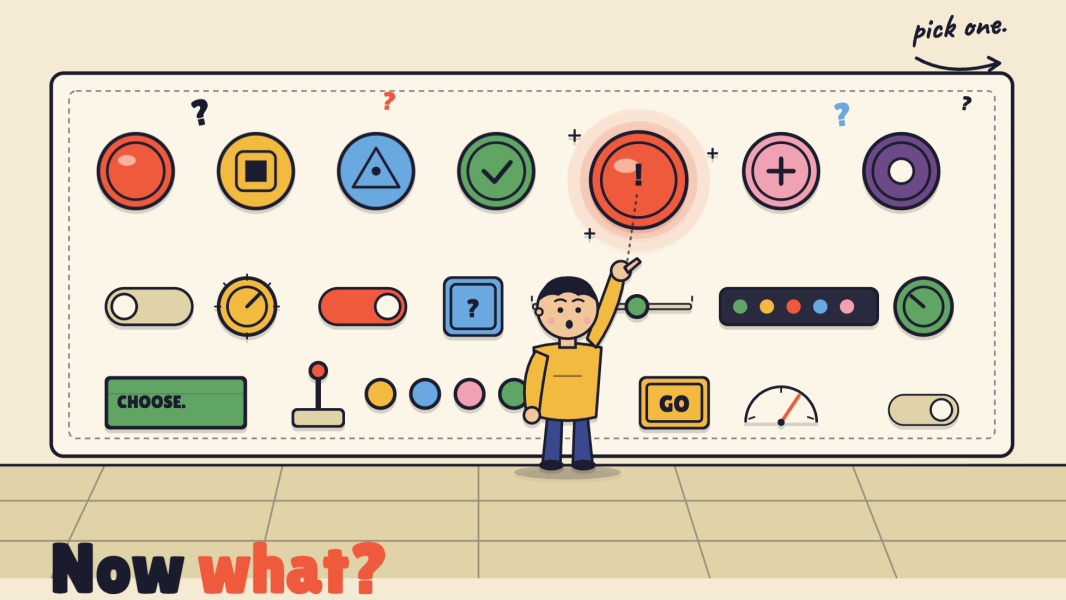
Congratulations, You Can Build Anything. Now What?on LinkedIn
We solved the build problem. Turning ideas into working software is no longer the constraint. And now we have a new problem - when you can build anything, the hard part becomes deciding what's worth building.

Everything You Know Just Expiredon LinkedIn
The hardest part of this shift isn't learning new tools. It's letting go of the instincts that made you good at your job until now. The next 2-3 years will reshape roles, teams, and careers. The people who come out ahead won't be the ones who waited for clarity. They'll be the ones who were already building.
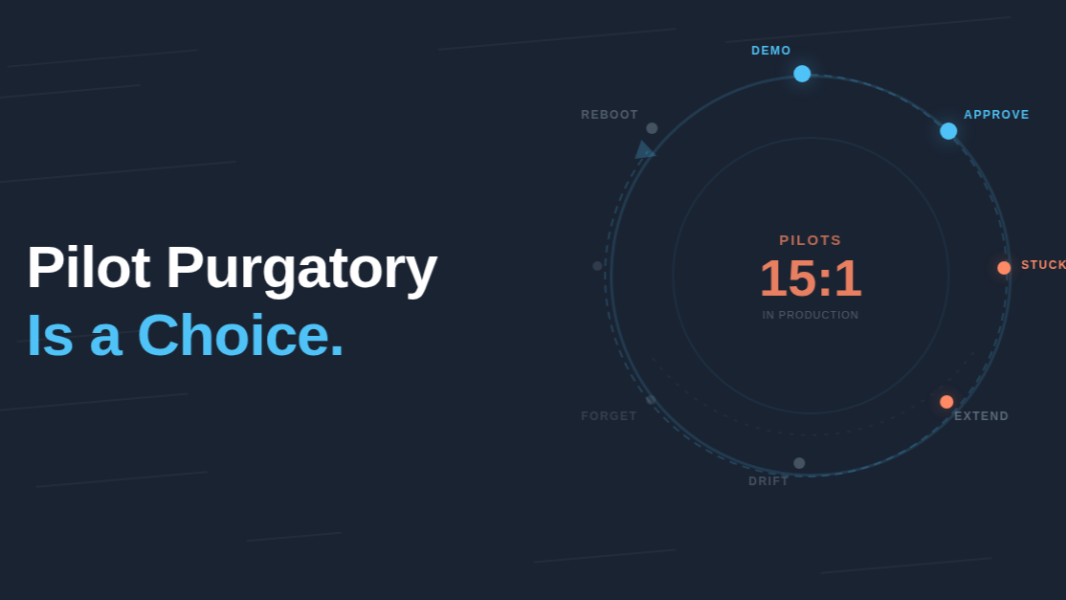
Pilot Purgatory Is a Choiceon LinkedIn
Two-thirds of companies haven't scaled AI beyond experiments. Not because the pilots failed - because nobody built the bridge from demo to production. We keep funding the exciting beginning and forgetting the boring middle. Here's how to stop choosing purgatory. Full take in the article below.
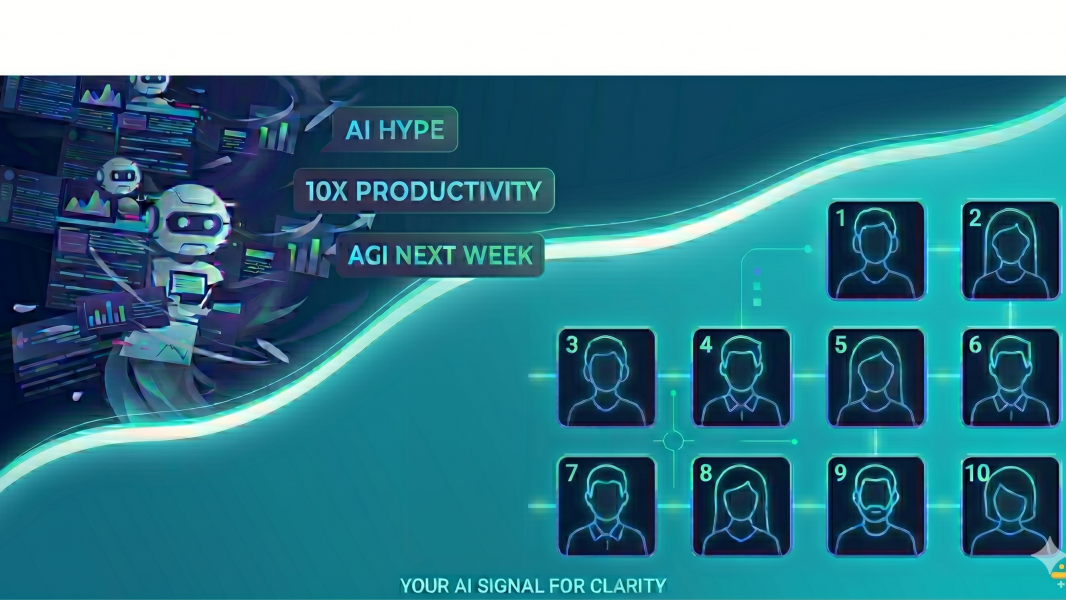
Your AI Feed Is Broken - Here Are 10 People Who'll Fix Iton LinkedIn
We're drowning in AI content and starving for signal. The trick isn't reading more - it's reading the right people. I wrote about the 10 people who've earned a permanent spot in my feed - the builders, thinkers, and educators who cut through the noise. Each one with direct links to their channels so you can follow them today.
If you find the Chief AI Officer, tell them we're sorryon LinkedIn
Asking 'who owns AI?' in 2026 is a bit like asking 'who owns the internet?' in 2002. Whoever you appoint is probably going to be very important, very tired, or very confused. Often all three. There's a better question - and a shape on the org chart that actually works. Full take in the article below.
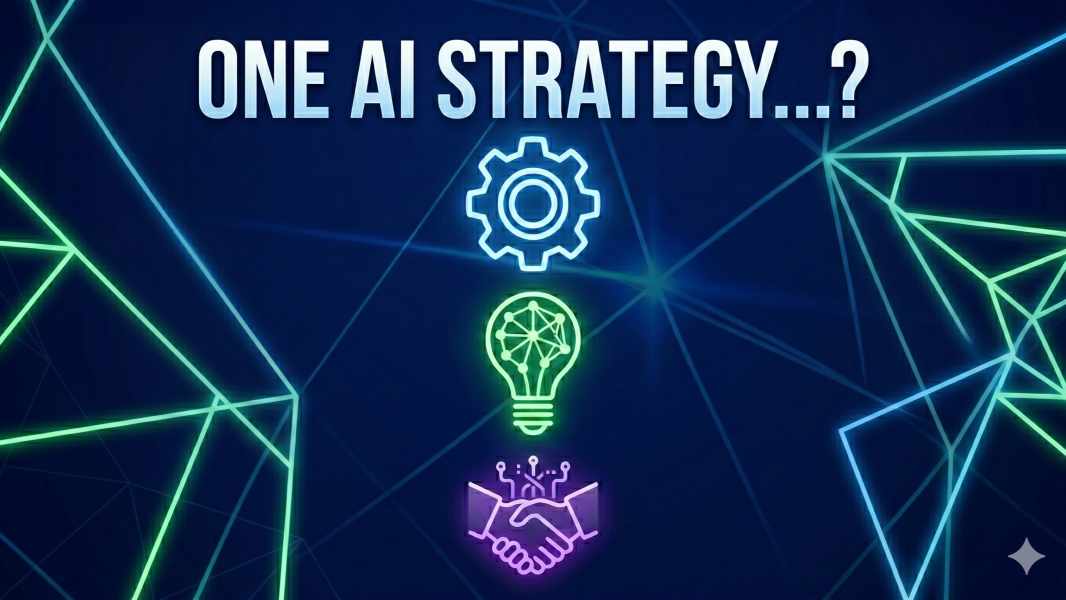
Your AI strategy is actually three strategieson LinkedIn
Most companies say they have an AI strategy. Look a little closer and it usually turns out to be at least three. It explains the muddled metrics, the patchy governance, and the person handed 'AI' who's wearing all three hats at once. It's not a budget problem. It's not a talent problem. And the fix is simpler than you'd think. Hint: it starts with counting to three.
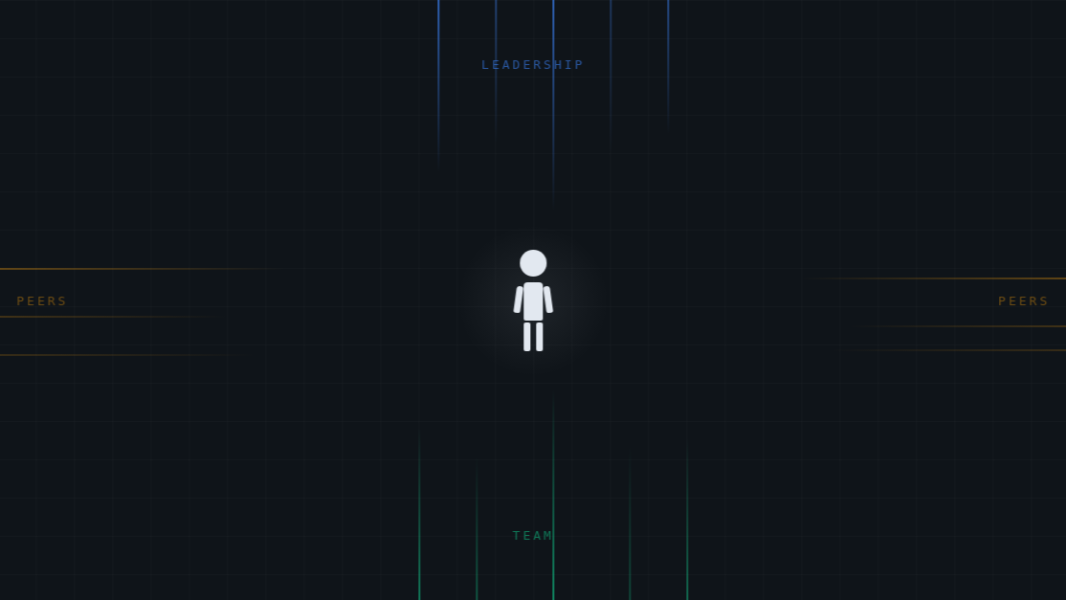
Engineering Manager - The Loneliest Job in Tech Right Nowon LinkedIn
The engineering manager role is under more pressure than it has ever been. Ship faster. Lead stronger. Stay technical. Absorb the chaos. Protect the team from the chaos you're absorbing. Also, have you tried AI? It's less a job and more a hostage situation with a daily standup. A look at what's changed, why it's hitting EMs hardest, and what the role needs to evolve into next.
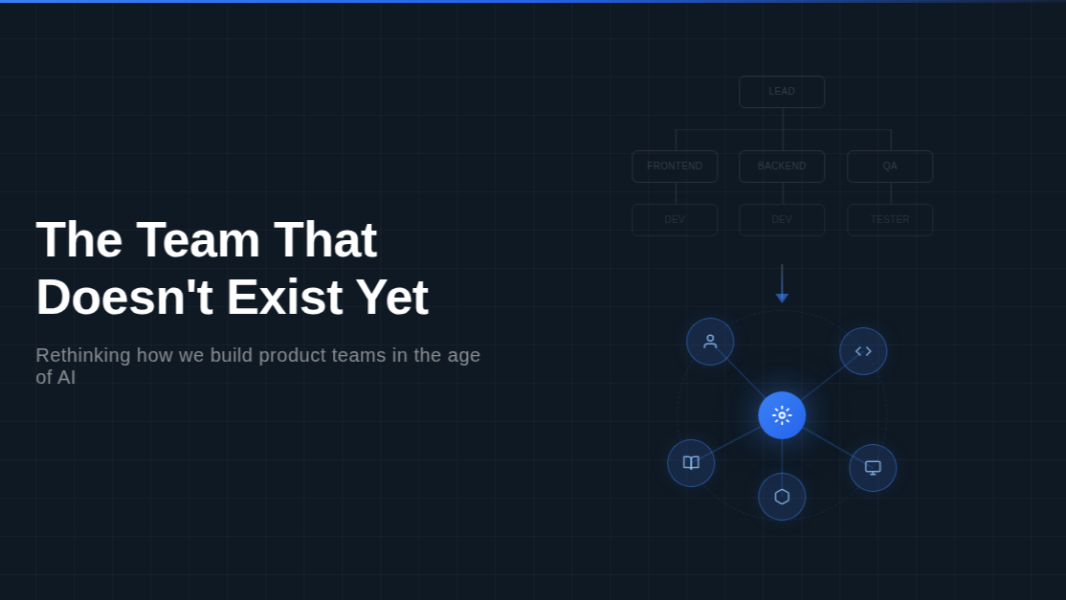
The Team That Doesn't Exist Yeton LinkedIn
If you build a product team from scratch today - with AI is a given instead of a bolt-on - what would it look like? The answer probably looks very different from current team structures and that gap is worth paying attention to. New post exploring what's fading, what's emerging, and why we might need to rebuild rather than renovate.